Gear guide
Beginner amps: what you actually need
Watts, modeling, headphones and Bluetooth, explained without the jargon.
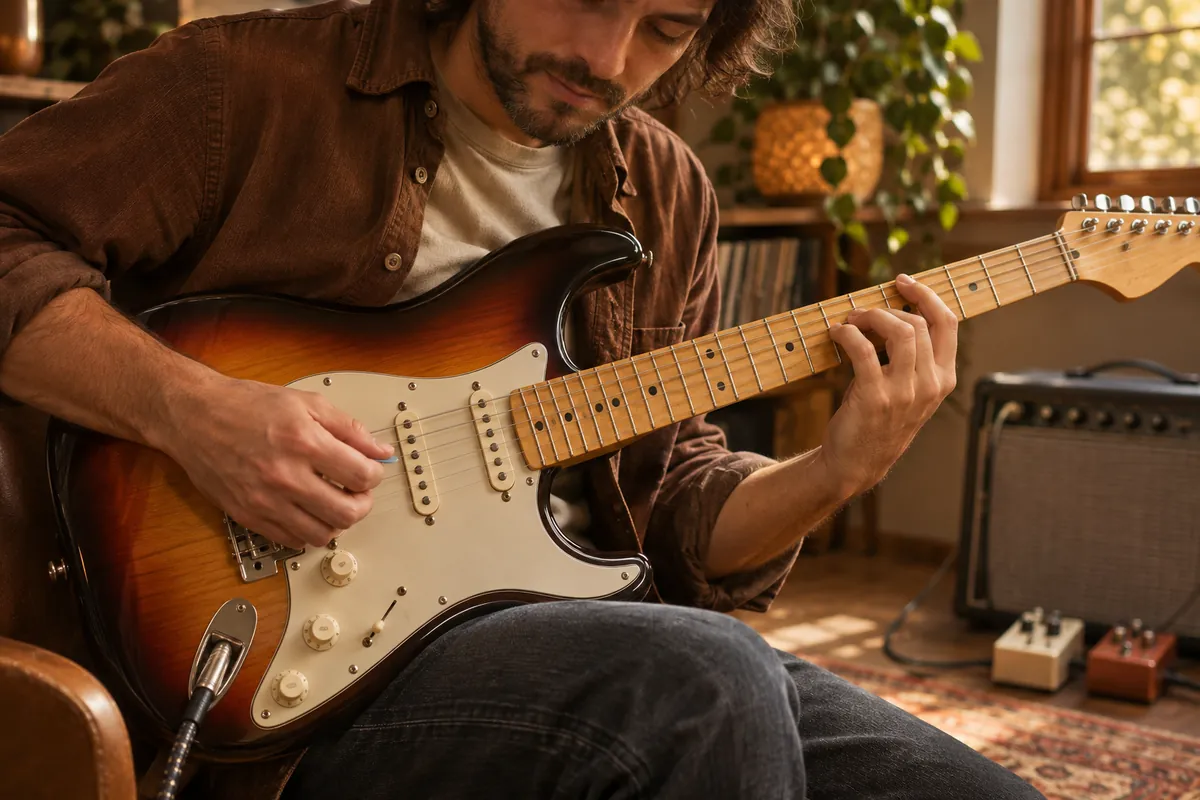
For practicing at home, you need far less power than you might think. A small amp is easier on your ears, your family and your budget.
How many watts?
- About 10–20 watts (solid-state or modeling): plenty for bedroom practice.
- About 30–50 watts: enough to keep up with a drummer at rehearsal.
- Tube amps are louder per watt. A 5-watt tube amp can be very loud.
Modeling amps: the beginner's friend
Modeling amps use digital processing to imitate many classic amps and effects in one small box. For beginners they're hard to beat: clean country tones, crunchy rock and built-in effects like reverb and delay, often with a headphone jack, Bluetooth for playing along with songs, and a tuner.
Features worth having
- Headphone output for quiet practice.
- Aux-in or Bluetooth to play along with recordings.
- A clean channel and an overdrive channel.
- Built-in reverb. Country and gospel tones love a little reverb.
Other options
Headphone amps that plug straight into the guitar, and audio interfaces that connect to a computer or tablet amp app, are great for apartments. Many players end up with both a small amp and a headphone setup.
Updated November 19, 2026.