Gear guide
Buying your first acoustic guitar
What to look for, what to skip, and how much to spend on a beginner acoustic that won't hold you back.
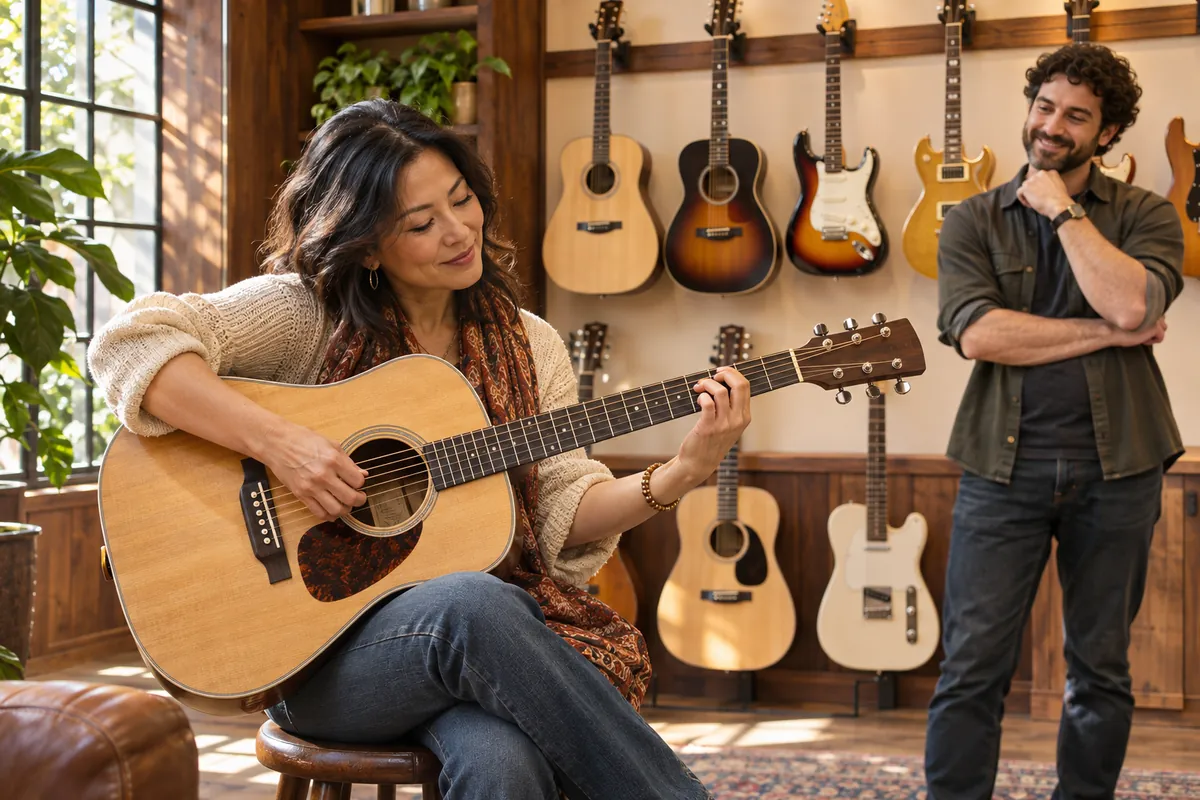
The wrong first guitar is one of the biggest reasons beginners give up. A guitar with strings set high above the neck is painful to play and hard to keep in tune. The right one doesn't have to be expensive. It just has to be playable.
How much to spend
| Budget | What to expect |
|---|---|
| Under about $120 | Toy-store and "starter kit" guitars. Often hard to play. Only worth it for a child's first try. |
| About $150–$350 | The sweet spot. Well-known brands make solid, comfortable beginner models here. |
| About $350–$700 | Solid-wood tops, better tuners and tone. A guitar you won't outgrow for years. |
Typical new prices; they vary by store and season.
What actually matters
- Playability. Low action (strings close to the frets) and no buzzing. If you can, play it before you buy, or buy from a store with a good return policy.
- A solid top (versus laminate) sounds better and improves with age. Not required for a first guitar, but nice when the budget allows.
- Size. Dreadnought bodies are big and loud. Concert, auditorium and "000" sizes are more comfortable for smaller players. Kids may need a 1/2 or 3/4 size.
- Tuners that hold. Cheap tuners slip, and the guitar won't stay in tune.
- Acoustic-electric models have a pickup so you can plug in at church or a gig. Handy, but not necessary at the start.
Steel strings or nylon?
Steel strings are brighter and are what you hear in country, folk and pop. Nylon-string (classical) guitars are softer on the fingers and have wider necks. They're great for classical, Latin and fingerstyle music, and for young children.
Ask for a setup
Many guitar shops will adjust the action and check the guitar for free or a small fee when you buy. It can make a budget guitar feel twice as good. See setup basics.
Updated November 19, 2026.